

Here’s a quick update on an interesting little experiment I’ve set for myself. As many of you know - and if you don’t, here’s the news - I’m running the Le Sacré Trail (87 km) in October. Right now, my training is focused entirely on that race, and I don’t have any other races planned (at least for now)
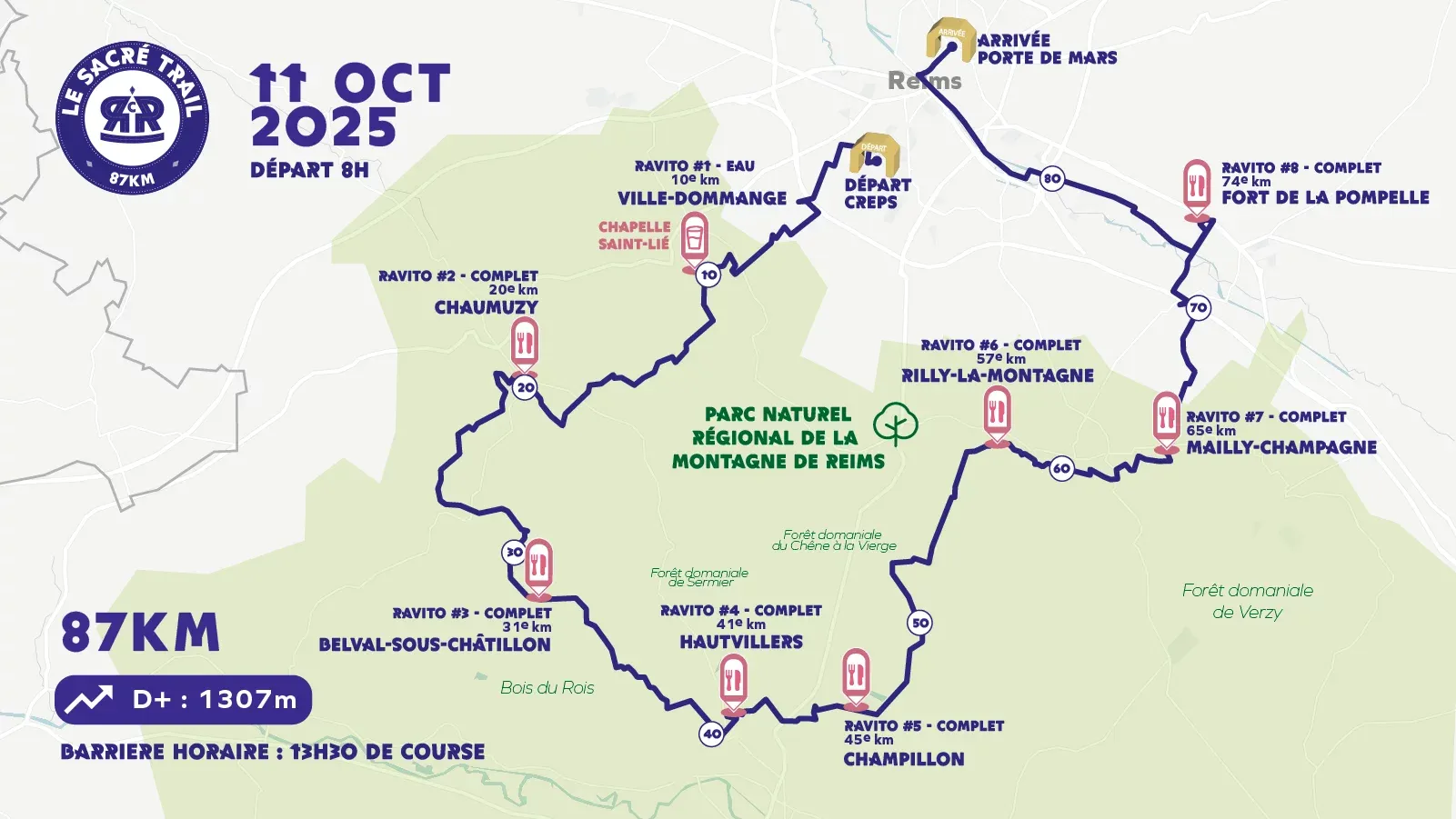
The route runs through the French region where champagne is produced (which is served before - I’m not sure about “during” - and after the race). It’s a very beautiful region if you want to spend a day of your life running there. But in fact, Reims itself, as the capital of the region and home to world-famous champagne houses, is a wonderful place to visit at any time
But all of that is just a prelude to the best part. And there’s only one highlight: the trail’s profile. With some allowance, this trail could be called flat, since the total elevation gain is just 1,300 meters for the entire route
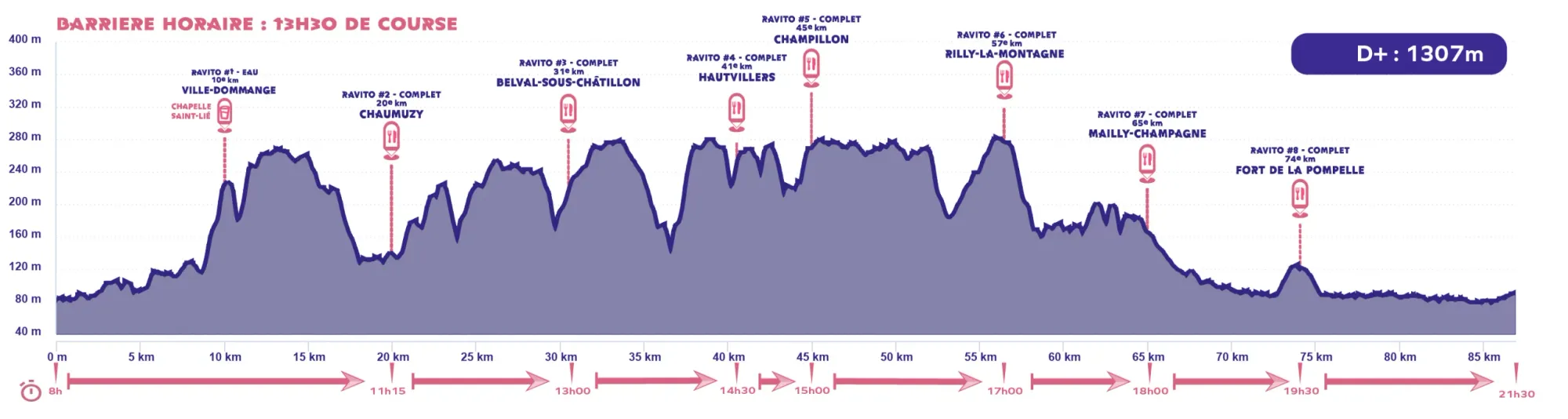
It’s all in the picture above. So, to sum it up, I’m going to try out a new experiment in structuring my workouts
What's the idea here? As you probably know, the entire running training process is based on heart rate zones, which are determined either using fairly rough formulas, based on how you feel, or by going to a lab and taking a test. The latter, by the way, is the most accurate - but also the most expensive option. You could also blindly trust, say, a Garmin to determine your heart rate, but that would be approximate. Very approximate
The problem with my current approach is that, as someone who’s used to following standards, I train by heart rate zones. But there’s one thing that really bothers me when I run around our area. When you run uphill, your heart rate skyrockets, which - on the one hand - is kind of okay, because at the same pace, the effort and load become much higher; on the other hand, to keep your heart rate steady and not let it rise above Zone 3, you have to slow down significantly, sometimes even switching to a walk
Over the past week, I’ve shifted my focus more toward maintaining my pace at all costs, which, on the one hand, helps with adaptation, but on the other, is really pushing my body to its limits. And now, after much deliberation with myself and my coach, we’ve decided to try training based on heart rate and giving it our all. Light workouts will still be heart rate-based; where necessary, we’ll walk. After a month or two of adaptation, we’ll be running uphill at the same heart rate
But when it comes to speed work, we keep up the pace no matter what. This includes interval training, tempo runs, and high-intensity interval training (the kind where your heart rate hits 190+ during short bursts, but it takes a couple of days to recover afterward)
And finally (though I’m not entirely sure I was actually looking forward to this), I’m starting to incorporate pole running into my training. It’s funny that you first have to learn how to walk with them! Only then can you start running. Because otherwise, they’ll probably get in your way more than help you
In short, I’m guaranteed a summer of questionable pleasures. All that’s left is to buy a new bike and do everything I can to avoid signing up for the pool. Otherwise, it’s not far from there to an Ironman
Discussion